SMILE vs. LASIK: What’s the Difference — and Which Is Right for You in Atlanta?
SMILE vs. LASIK: What’s the Difference - and Which Is Right for You?
You wake up. You reach for your phone. You reach for your glasses. Again.
If you’re tired of relying on contacts or glasses to see clearly, you’re not alone. Thousands of patients across Atlanta, Johns Creek, Alpharetta, Cumming, and Roswell are choosing laser vision correction to experience life without visual aids.
At Atlanta Vision Institute, two of the most advanced procedures we offer are LASIK and SMILE. Both can dramatically improve vision, but they’re not identical.
Let’s break it down in a simple, clear way so you can understand the difference - and take the next step toward visual freedom.
Blogs help you connect with your audience on a more personal level and allow them to interact with you in an individual capacity. Blogging also helps to present viewers with fresh content regularly.
What is LASIK?
LASIK (Laser-Assisted In Situ Keratomileusis) is the most widely known and performed laser vision correction procedure in the U.S., treating nearsightedness, farsightedness, and astigmatism. LASIK works by reshaping the cornea so light focuses properly on the retina - giving you clearer vision without glasses or contacts.

How LASIK works
Your eye is numbed with drops.
A femtosecond laser creates a thin flap on the cornea
An excimer laser reshapes the underlying corneal tissue.
The flap is repositioned acting as a natural bandage.
What Patients LOVE About LASIK
The procedure takes about 10–15 minutes, and you are able to return to normal activities same day. Most people achieving 20/20 vision or better! Most return to normal activities the next day, with a 96% patient satisfaction rate.
LASIK has helped millions achieve long-term freedom from glasses - and it remains one of the most trusted procedures in refractive surgery.
What is SMILE?
SMILE (Small Incision Lenticule Extraction) is a newer, minimally invasive laser vision correction procedure. Atlanta Vision Institute is proud to be the only practice in Atlanta offering SMILE, making us a destination for patients seeking the latest in refractive technology.
SMILE treats nearsightedness and astigmatism, and unlike LASIK, SMILE does not create a corneal flap.
How SMILE works
Your eye is numbed with drops.
A femtosecond laser creates a small disc of tissue (called a lenticule) inside the cornea.
The surgeon removes that lenticule through a tiny incision.
The cornea reshapes naturally.
That tiny incision - just a few millimeters - is what makes SMILE unique.
There is no flap, a smaller incision compared to LASIK, lower dry eye risk, quick recovery, and clear results.
Who is a good candidate?
Your candidacy depends on several factors, which we evaluate during your consultation at Atlanta Vision Institute.
Age & Prescription Stability
LASIK: 18+ years old
SMILE: 22+ years old
Prescription stable for at least one year
Prescription Type
LASIK treats nearsightedness, farsightedness, and astigmatism.
SMILE treats nearsightedness and astigmatism only.
Corneal Thickness
LASIK requires enough corneal thickness to safely create a flap.
SMILE may be a better option for patients with thinner corneas.
Lifestyle
If you:
Play contact sports
Work in physically demanding environments
Want a flap-free option
SMILE may be ideal.
Dry Eye Concerns
LASIK can temporarily worsen dry eye symptoms in some patients.
SMILE affects fewer corneal nerves, which may reduce that risk.
Overall Eye & Medical Health
Patients with uncontrolled diabetes, autoimmune conditions, glaucoma, or cataracts may not qualify for laser vision correction — but other vision correction options may be available.
Which is better? SMILE or LASIK?
The truth? Neither is universally “better.” The best procedure is the one that fits your eyes, your prescription, and your lifestyle. Some patients are ideal LASIK candidates. Others are better suited for SMILE. And some may qualify for alternative options like EVO ICL. That’s why a personalized consultation is essential.
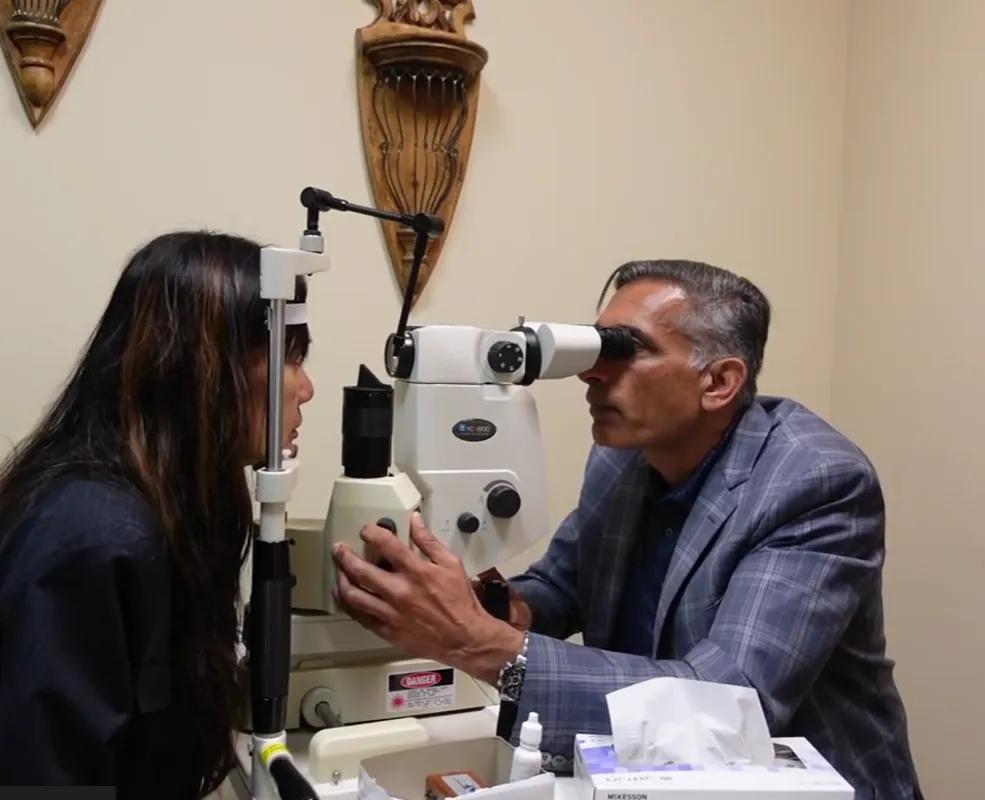
Not sure where to start? Our experienced refractive surgeons use advanced diagnostic technology to determine whether LASIK or SMILE is right for you.
The first step? A comprehensive vision correction consultation.